Kenny Wayne Shepherd: His Fathers’ Son

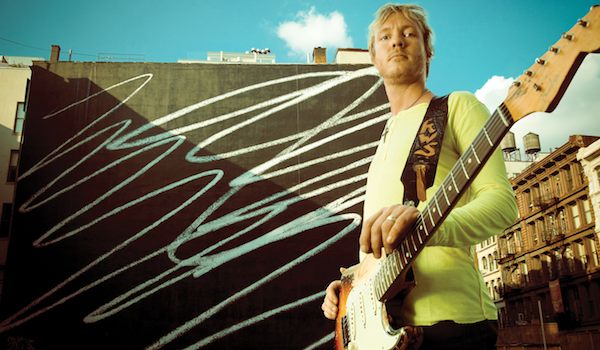
Kenny Wayne Shepherd. Photo by Elsa Hahne.

Kenny Wayne Shepherd. Photo by Elsa Hahne.

Shreveport may be at the opposite end of Louisiana from New Orleans, but both cities play a part in the state’s rich musical heritage. The great blues singer/songwriter/guitarist Leadbelly was a formidable presence in Shreveport’s blues clubs during the 1920s, and the region has also been a home for blues musicians such as Jesse Thomas, Dorothy Prime and the Bluebirds. But the biggest noise out of Shreveport in recent years is guitarist Kenny Wayne Shepherd, a dynamic soloist with a fierce delivery on the Fender Stratocaster that has earned every one of his recordings the number one spot on the blues charts.

Like a lot of Louisiana musicians, Shepherd took musical influences from his father. In this case, it was his father’s record collection that inspired the young Shepherd to pick up a guitar. In those days, Ken Shepherd was a disc jockey and promoter whose collection of blues records fascinated his son, but Kenny Wayne really got the bug when his dad brought him to see Stevie Ray Vaughan perform. After seeing Vaughan, the 7-year-old boy decided on the spot that he wanted to play guitar for a living.

Shepherd taught himself by listening to his father’s records and copying licks note for note. After making his public debut at age 13 when he joined Bryan Lee onstage at the Old Absinthe House, Shepherd progressed, releasing his debut, Ledbetter Heights, at 17.

Blues fans and rock guitar buffs alike responded to the youngster’s high intensity playing. “Blue on Black,” a track from his 1997 release Trouble Is, stayed at number one on the rock charts for 17 weeks while the album topped the blues charts at the same time.

Kenny Wayne Shepherd in guitar shop. Photo by Elsa Hahne.

Photo by Elsa Hahne.

After releasing Live On in 1999, Shepherd waited five years before putting out another album, The Place You’re In. Shepherd dug back into his blues roots for the 2007 set 10 Days Out, playing with elder bluesmen such as Bryan Lee, Clarence “Gatemouth” Brown, B.B. King, Henry Townsend and David “Honeyboy” Edwards, who died last month.

Shepherd’s just-released album, How I Go, is his first blues rock set in seven years, and it shot right to the top of the blues charts upon its release. Shepherd took time to talk with OffBeat just before he was to play his first Shreveport concert in several years.


Using How I Go as the title of the record makes it seem like this is a statement of purpose about who you are right now.

Generally, what I’ve done in the past is used song titles as the title for the album. My first album, Ledbetter Heights, we named for the area of Shreveport where I’m from. This time I tried to look a little deeper and come up with something that represents where we’re at right now, what we’re trying to say with this album. But rather than choose a song title, I listened back to the songs and reviewed the lyrics of the songs. I was surprised to find out that we actually wrote the words “That’s how I go” twice in two different songs without actually realizing it. So that was one of the deciding factors. It’s a slightly recurring theme in the record and it’s really unintentional, but it makes the statement, “This is who we are; this is how we do things.”

How does your songwriting process work?

I sat around for the past several years with my little iPhone. Any time I had an idea, I would record it. I accumulated over 300 different guitar riffs and rhythm parts. When it came time to start writing songs, I started working on lyrics, then went into my library of digital guitar parts and started choosing the ones that I thought would be appropriate for the songs.

For the most part, it starts with the guitar, and that dictates the mood of the song. Then we start fashioning the melody. I pay a lot of attention to the production side of the record because I wrote the songs and I know what I want them to sound like.

Kenny Wayne Shepherd. Photo by Elsa Hahne.

Photo by Elsa Hahne.

It sounds like you put more thought and focus into this record.

I think it’s a little more refined, a little more mature. I’ve made a conscious effort to be very selective about what I play and not get into the habit of overplaying. So many guitar players want to show off how many notes they can cram into a phrase. That’s not what it’s about to me. Listening back to my heroes, the notes they played that moved me emotionally and reached my soul were the ones where they were just bending this one note and milking it for all it was worth, leaving a big, wide open space so you could hear the rest of the band behind it. Those are the things that I want to present to my listeners. So it’s more about feel and space and selecting the right notes than about playing as many notes as you can fit.

There’s a whole lot of music on this record, 17 songs.

I figure the fans have had to wait a while for this record, so I wanted to give them a lot to listen to. I write 25 to 35 songs for every album, so we have some great songs that we still haven’t cut from this record. I try to mix up the tempos and textures; it’s like a book or a movie. I look at the album as a whole body of work. I think the listener should hear it from the first song to the last song, and there should be certain peaks and valleys. It should take you on certain emotional journeys, paint different pictures in your mind.

Are you excited about playing the Crescent City Blues and BBQ Festival?

I like playing in New Orleans any chance I can get. We plan on putting on a great show. Sometimes when there are friends of ours that live in New Orleans we try to bring people up on stage to jam, people like Bryan Lee, Art Neville. When I was 13 years old and I made my first demos in a studio in Metairie, Art came in and played Hammond organ on it. Nobody knew who I was back then. Back in the day before Gatemouth died, Gatemouth used to come out and jam with us too. Gatemouth was a character, a one-of-a-kind guy. He spoke his mind to everybody no matter what. He was an innovative player, for sure, a real genius at his craft, one hell of a guitar player. He used to come and hang out with us all night in the dressing room when we played at the House of Blues.

You also have had a number of exchanges with B.B. King. Any advice from him you can share?

He’s like a father to me. I’ve been playing blues since I was 15 years old and he’s taken me in, calls me son. He’s one of the finest examples of a human being. If there ever was a role model, I’d want to be like him when I grow up. He said a lot of inspirational things to me, gave me a lot of encouragement about my playing.

There’s a legendary story about you being discovered by Bryan Lee.

At the Old Absinthe House back when it was a real bar and not a daiquiri stand, I was down there with my dad and some of his friends. Me and my dad would drive down to New Orleans, sometimes on a weekly basis, to watch Bryan and his band play. On this particular evening, one of my dad’s friends went up and asked Bryan if he’d let me sit in. He agreed. He didn’t know who I was, but he said, “He can do two songs, then he’s got to get down because it’s my show and I’ve got to close the show.”

I did my two songs, and when it was time to get down he said, “You’re not going anywhere!” I ended up playing until two o’clock in the morning with him. I got my very first standing ovations. It was incredible. I’d never been on a stage before. It was a really good opportunity for me to see if I was cut out for doing this or not. It gave me the confidence to move forward. It was not very long after that that I found myself in the studio in Metairie with Art Neville doing my first demo, which we used to shop for a record deal. Then I put together my own band, and a year after that I signed that record deal.

So you feel New Orleans influenced you musically.

Absolutely. Some of the biggest turning points in my career happened down there. Playing with Bryan Lee, coming down there regularly to play, playing Jazz Fest and watching all those people down there—I was absorbing everything whenever I was down there. When I was doing my first record, we came down there and stayed in an apartment on Jackson Square. I wrote a bunch of songs for my first album down there in Jackson Square. I’d just sit out there on the balcony and write songs.

So you were listening to Tuba Fats play in the Square while you were writing songs?

Oh yeah. I got a lot of my musical influences from New Orleans.

Kenny Wayne Shepherd. Photo by Elsa Hahne.

Photo by Elsa Hahne.

Obviously your father was a very important part of your development. Did he interest you in music, or was it something that was just natural to you?

I think it was both. I was exposed to the music that I play now because of my dad. My family all loved the blues. My dad took me to all these concerts, and he worked for the radio, so I grew up hanging around the radio station and listening to all this music. I was constantly meeting musicians. My dad turned me on to all these blues players, and I really soaked it all up.

He told me the first concert he ever took me to was to see Muddy Waters and John Lee Hooker when I was two years old. He took me to see Stevie Ray Vaughan when I was seven. I got to meet Stevie because my dad was putting on the Louisiana Music Festival that he did for a few years. The same thing happened to me every time I saw him play, and I saw Stevie Ray play several times. I was completely mesmerized by him and what he did and the way he played. I remember sitting there and not taking my eyes off of him from the moment he started to the moment he was done.

Hendrix is probably one of the other biggest influences on me as a guitar player and as a performer. Watching Jimi Hendrix gave me the idea of how to play outside the box and not be confined musically. You can see the influence visually he’s had on me as well when you see me onstage. That’s why I started playing the Strat, but once I started playing, it became like part of me. My first guitar was a wannabe Strat. The feel of that guitar is so natural to me that anything else feels a little bit awkward.

Everybody has their influences. We all started playing the guitar because somebody inspired us to pick up the instrument. When I started out, I spent many hours learning Stevie Ray Vaughan songs and ZZ Top songs and Jimi Hendrix songs, B.B. King, Albert King and Albert Collins. All of that is what taught me how to play the guitar, how to cultivate my sound as a guitarist. All of those people, their music is going to have a presence in my music. I don’t copy anything, but there’s no denying that those people are responsible for me playing the instrument, and all those years that I spent learning how to play and listening to all that stuff, it’s going to find a way into my music.

Are you influencing younger players in turn?

I get a lot of messages on Facebook and Twitter and stuff. Just the other day I got one that said, “Hey man, I saw you play. I’m 16 years old and you’re the whole reason I play guitar.” I remember what it’s like to be that kid, what it’s like to listen to these guys play and think they’re like Superman to me on guitar. Looking at them on the cover of guitar magazines and imagining what it would be like to be one of those guys.

And now you are. Is there anyone you haven’t played with who’s still alive that you would like to play with?

I haven’t had the chance to play with Clapton yet. I’d love to have the opportunity to play with him.

You said you’d like to keep playing until you’re 80. The music scene is changing all the time. What do you project for yourself down the road?

Blues never goes out of style. As long as I remain true to myself and my fans, I’ll keep going. Look at Pinetop Perkins, man. He just passed away, but he was 97 years old and he was still playing. Blues is 100 years old now. It has its ups and downs, but it never completely goes away and there’s always an audience for it. Blues players are lifelong players, you know?

All of that aside, I can’t imagine being alive without a guitar in my hands. It doesn’t matter how old I am as long as I can move my fingers. I can’t imagine not playing the guitar. Muddy Waters was great right up until the end. Hard Again, 1977, was one of the greatest blues albums of all time.

I’m 34. I don’t want to think about a legacy. I do want to leave something behind that we can all be proud of. I want to make everybody proud. My kids listen to this stuff. When you make records, they’re out there forever. I just want to do stuff that my kids will be proud to say that their dad did this.

blog comments powered by Disqus
DeLuna Fest