DeLuna Fest

Camile Baudoin’s Blues

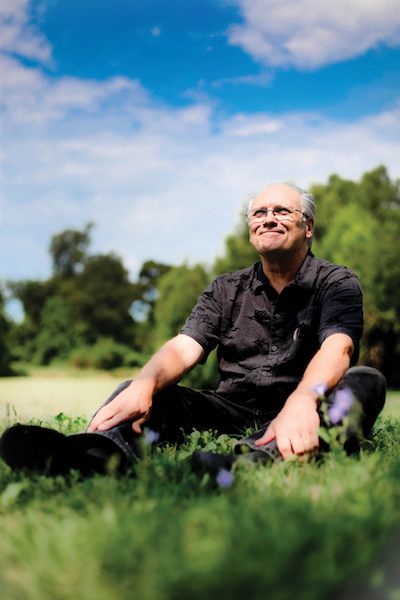
Camile Baudoin, New Orleans guitarist. Photo by Elsa Hahne.

Camile Baudoin. Photo by Elsa Hahne.

When the Radiators played their final shows in June, few would have guessed that the band member most prepared for life in a new musical context would be Camile Baudoin. The band’s soft- spoken, self-effacing lead guitarist was known for his intense, dexterous playing, but not for his stage presence or front man capabilities. His vocal chores were limited to occasional harmony parts, but the night after the Rads’ “Last Watusi” ended at Tipitina’s, Baudoin was back in action, playing a completely different kind of music for a packed house at the Hi Ho Lounge.

“I’m scared to death in some ways,” Baudoin admitted before the show. “But at the same time I’m getting so much positive feedback from people. Look, doors close and doors open, it’s really true. It’s a turning point. This will definitely make me more creative, keep my spirit and energy going. After doing the same thing for 33 years, it will be good to change it up a little bit.”

The Baudoin leading this group was an acoustic guitarist fronting an Acadian-style country band. His laconic wit and matter-of-fact tenor vocal delivery was more typical of a fais do do veteran from rural Louisiana than a rock guitarist. His comfort level with this material was almost astonishing as he sang in French and English, leading the crowd in a sing-along of “Ma Patate,” an “adult nursery rhyme” about potatoes and onions.

Baudoin’s musical partners in what he’s calling the Living Rumors are guitarist David Doucet, best known for his work with BeauSoleil, and violin player Harry Hardin from Johnny Sketch and the Dirty Notes. Doucet is a great musical resource who exhibits an extraordinary rapport with Baudoin on guitars, but it’s Hardin’s playing that is this unit’s most delightful surprise. The band’s repertoire is mostly taken from its Threadhead-financed debut recording, Old Bayou Blues, a mix of 1950s-era material from sources like Hank Williams and Fats Domino with instrumentals written by Baudoin and a song written by one of his musical relatives, Rosalie Toups.

The record is a masterpiece of simplicity. The band’s version of “Oh Lonesome Me” is a signature illustration of its virtues, a country song with a blues feeling sung in a conversational tone. Baudoin’s voice is completely unaffected as it sticks closely to the melody. Hardin’s violin is exceptionally expressive when contrasted with the honest, straightforward vocal.

The music on Old Bayou Blues reflects Baudoin’s childhood influences. He grew up during the 1950s in the urban environment of New Orleans’ Broadmoor neighborhood, but his parents were both raised in rural Louisiana, and every weekend the family would visit its country relatives. Young Camile came to think of country life as an idyllic alternative to the everyday world of the city.

“The idea for this album came about from the times when we evacuated for hurricanes to our friend’s place in Mississippi, where I was working on some ideas that turned into this album,” Baudoin says. “This was when the Radiators were still playing, so it was kind of a fluke that this came to be. As one thing was going away, the other one was being born. The songs on the record are the songs that we played in the living room when I was a kid. These are the songs that I learned when I was getting guitar lessons from my paran (godfather) when I would go out to the country every weekend.

“My father’s sister’s husband Alton was in the Dufrene Brothers Band. We bought a guitar from the Sears and Roebuck catalog, and my father taught me a few chords. That’s where the Fats Domino songs come from. There was always music around the house, and my dad loved Fats Domino. I had an aptitude for playing. My dad said, ‘Next time we go out there, ask Alton to show you some things. He’ll teach you some guitar.’ And that was that. Aside from the hunting and fishing every week, he would teach me some different music.

“Back then, ‘Your Cheating Heart’ was one we played. ‘Just Because,’ ‘Jambalaya’—that’s not on this record but we play it live. Those songs, he taught me the chords and we would all sing along. ‘Steel Guitar Rag’ was the first song where I was taught a melody to play. It was a lead part, but it wasn’t a jamming lead, I was taught to play it just this way. I let David Doucet do the only solo on ‘Steel Guitar Rag’ purposely because I played it like he taught me.”

Baudoin began playing with Doucet some years ago at the Kingpin, where David did some casual solo gigs. They continued to develop their musical relationship at Doucet’s Monday night shows at The Columns.

“The reason David jumped onto this project,” says Baudoin, “is that BeauSoleil played some of these songs. He liked the versions. He liked the songs for the sake of the songs. He said, ‘Man, you’re doing some cool stuff here.’ That’s why it works. It’s really simple but it’s the good shit, man.”

blog comments powered by Disqus