Michael Arnone's Crawfish Fest, New Jersey

Obituary: Benny Spellman (1931-2011)

Obituary: Benny Spellman (1931-2011)

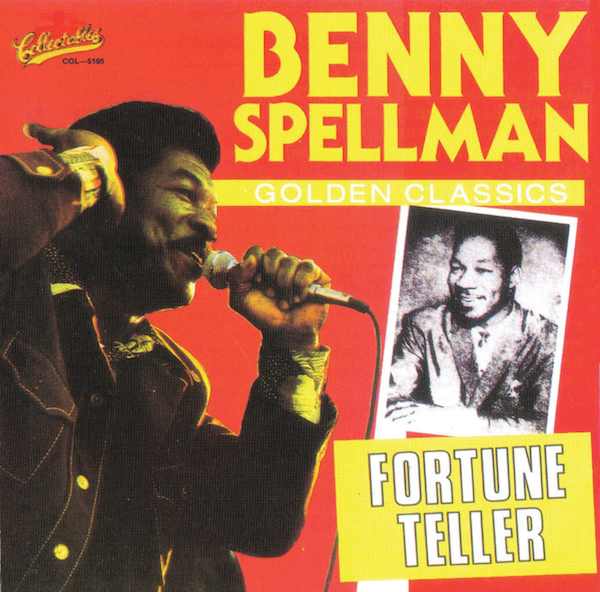
Benny Spellman, who accounted for the wonderful two-sided 1962 national hit “Lipstick Traces” b/w “Fortune Teller,” and supplied the baritone interjections on Ernie K-Doe’s number one hit “Mother- In-Law,” died June 3 at an assisted living facility in Pensacola, Florida, of respiratory failure. He was 79.

“Benny was a great entertainer,” confirms Irma Thomas, who recorded at Minit Records with Spellman and performed at several of the same venues with him. “Outgoing, gregarious, always upbeat—that was Benny. He was constantly in motion—he wasn’t the kind of guy to stand still on stage.

“I really got to know Benny when we did rehearsals [for recording sessions] at Allen [Toussaint]’s house on Earhart Boulevard. Benny and I did a lot of backup singing on sessions for Allen. We got $18, $20 a session. We played a lot of the same places, especially Fraternity Row on Broadway. The fraternity would book a local band and all the bands knew our material. Normally on a job like that, there would be three local artists. Often it was me, Benny and somebody else.”

Born in Pensacola on December, 11, 1931, Spellman loved sports first, and he earned a football scholarship to Southern University at Baton Rouge. While there, he exercised another interest—singing. Spellman sat in with several local jazz and R&B groups and won several talent contests. After graduation, Spellman was drafted and spent two years in the army.

When his army hitch ended in 1959, he returned to Pensacola. By chance, he ran into Huey Smith and the Clowns, who had just wrecked their bus and were stranded. Spellman gave the group a lift to New Orleans, but rather than return to Florida immediately, he decided to stick around New Orleans awhile and got involved in the music scene. He soon became a regular at the Dew Drop Inn, often sitting in with the Dew Drop house band, Edgar Blanchard and the Gondoliers. In 1960, Spellman auditioned for the fledgling Minit label (the same audition that produced Aaron Neville, Lee Diamond, Jessie Hill and Willie Harper) and was signed by Joe Banashak and Larry McKinley, who headed up the label.

“Benny was by far the most popular rhythm and blues artist in New Orleans [at the time],” said the late Joe Banashak in 1984. “He was always working, even when nobody else could find a job. He had those teenagers mesmerized. He would shot boogers at them and they’d still eat him up. Benny would have two or three gigs a night and he’d go from gig to gig on the NOPSI bus.”

Spellman was also valuable around the studio.

“He was always willing to help out,” added Banashak. “He would sing backup vocals when he wasn’t scheduled for his own session. I remember breaking up a fight because he and K-Doe were arguing over who was responsible for making “Mother-In-Law” a hit. (Ironically, Spellman died 50 years to the week “Mother-In-Law” reached the top of the charts.) But most of the time things were pretty professional.”

Spellman was paired with Allen Toussaint, who was Minit’s house producer. His first first two singles stalled, but Spellman, Toussaint and Banashak’s perseverance paid off when “Fortune Teller” and “Lipstick Traces” rose to No. 80 on the national pop charts and number 28 in the R&B charts. Musicologists have theorized that Minit might have realized higher sales figures had the songs been issued separately, but over two decades later, Banashak still never had any second thoughts about pairing the two classics. Spellman followed his hit with “Every Now and Then,” which was very much styled after “Mother-In-Law,” but he didn’t have the same success.

When Minit folded in 1963, Spellman had a brief stint at Watch Records, where he recorded the memorable “Slow Down Baby (Don’t Drive So Fast).” When Toussaint got back from the army, he convinced Spellman to sign with ALON Records (owned by Banashak), where they had local success with “Word Game.” Atlantic leased the single, but it narrowly missed the national charts. Spellman continued to perform and record sporadically on a handful of local labels, but by 1968, the local R&B scene was on life support. Gigs were hard to find, so Spellman took a job working for the local Miller beer distributor. He remained semi-active as an entertainer, though, and performed annually at the New Orleans Jazz and Heritage Festival.

Spellman returned to Pensacola in the 1980s during a period when his recordings were being reissued on both sides of the ocean. The following decade, he was back in New Orleans. Spellman often sat in with the Iguanas, who recorded a slowed-down, haunting version of “Fortune Teller” in 1993 and “Benny’s Cadillac,” a new song that tells the story of the wheels being stolen off of his car while it was parked outside the Maple Leaf.

Sadly, a stroke felled Spellman around 1996 and he was placed in an assisted living home. Spellman was elected to the Louisiana Music Hall of Fame in 2009, an honor which he deeply appreciated. Benny Spellman is buried in his hometown of Pensacola.

blog comments powered by Disqus